Last updated November 21, 2026
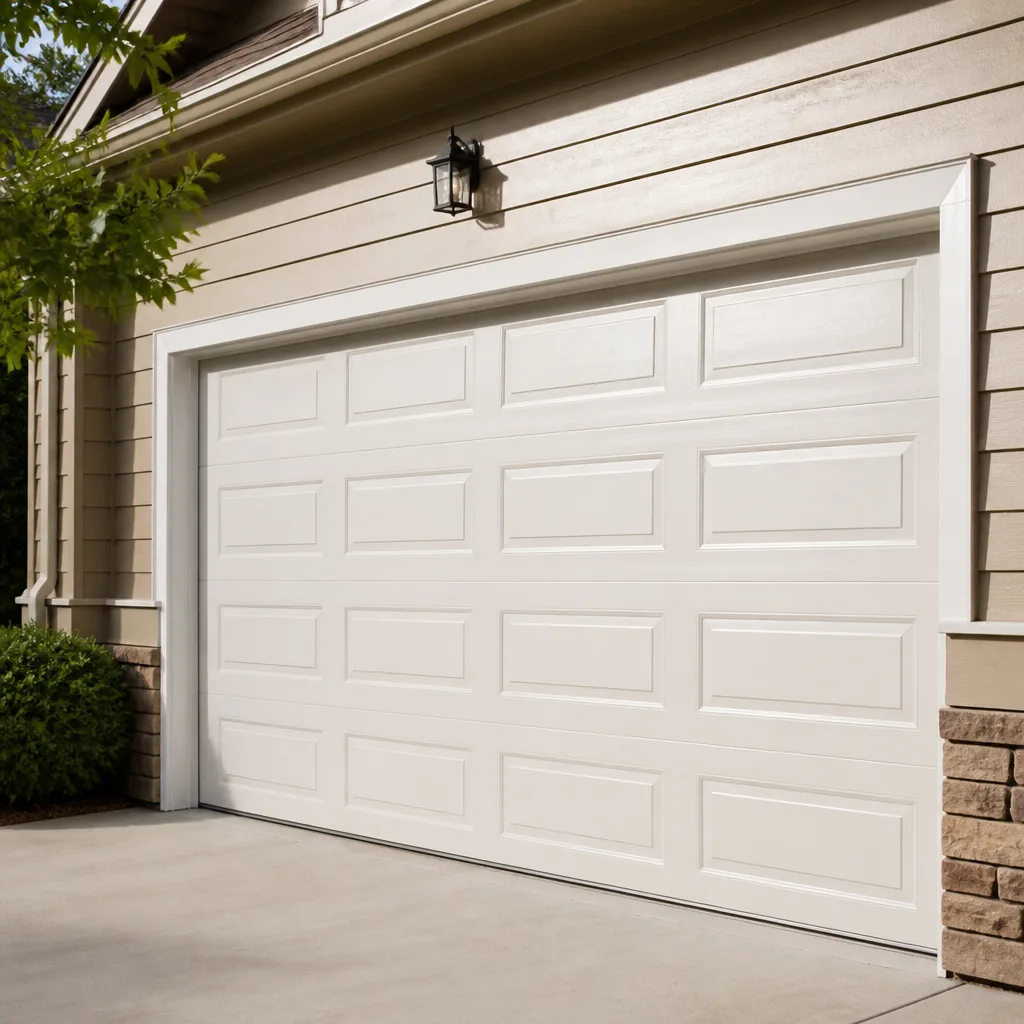 Raised-panel steel
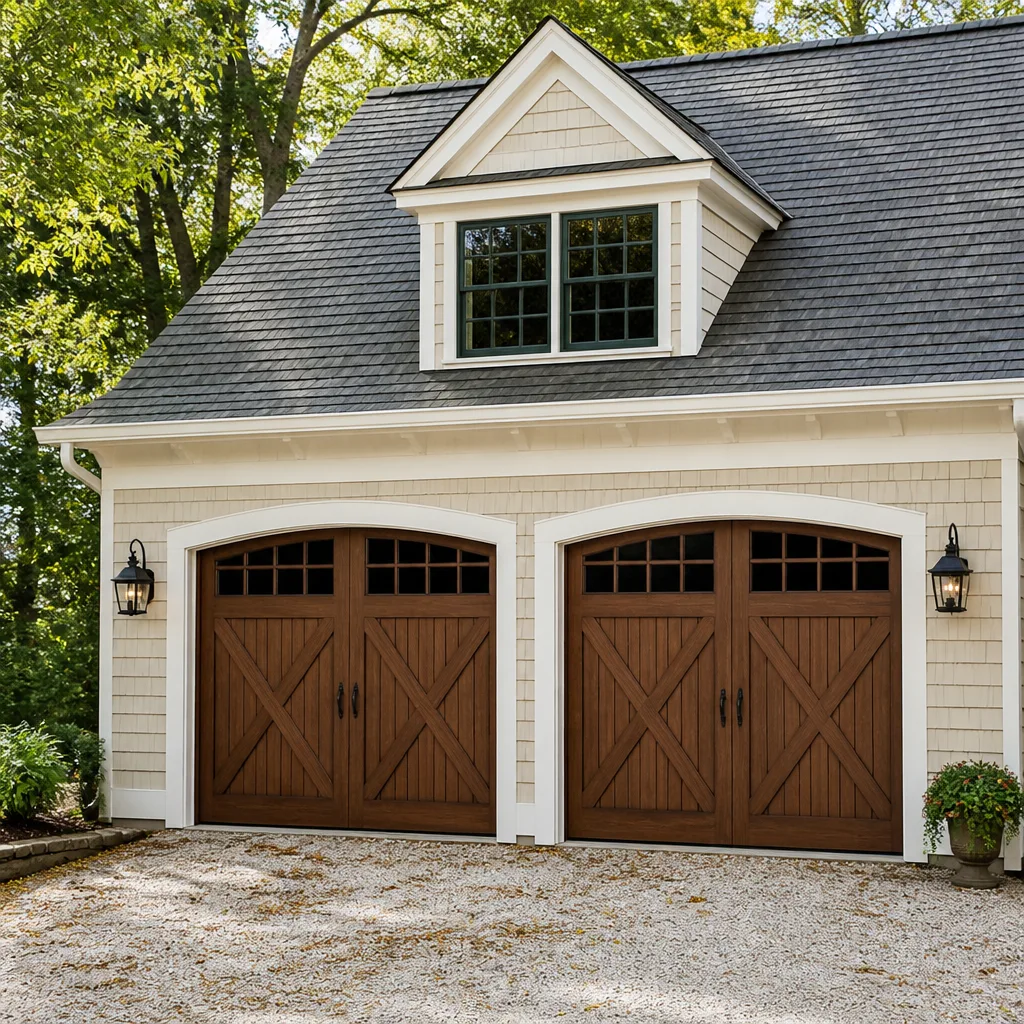 Carriage house
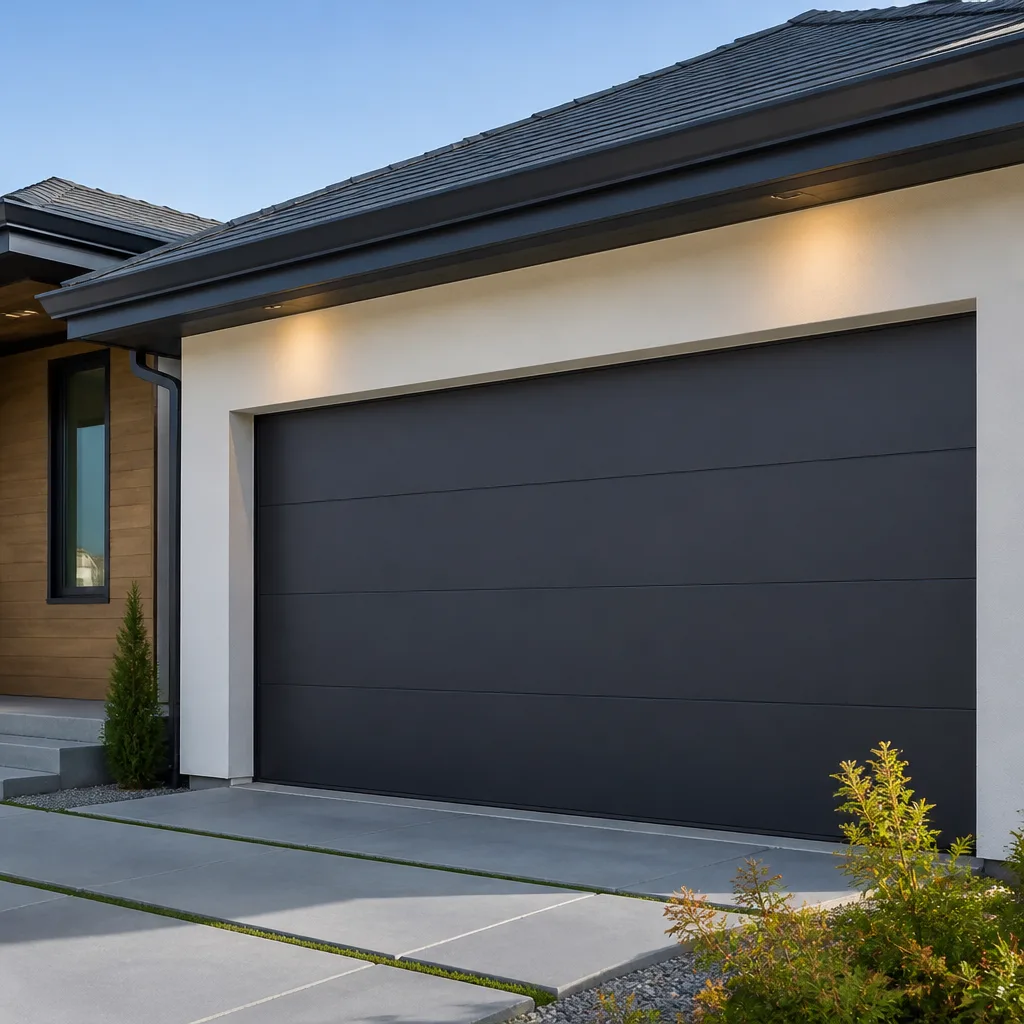 Modern flush
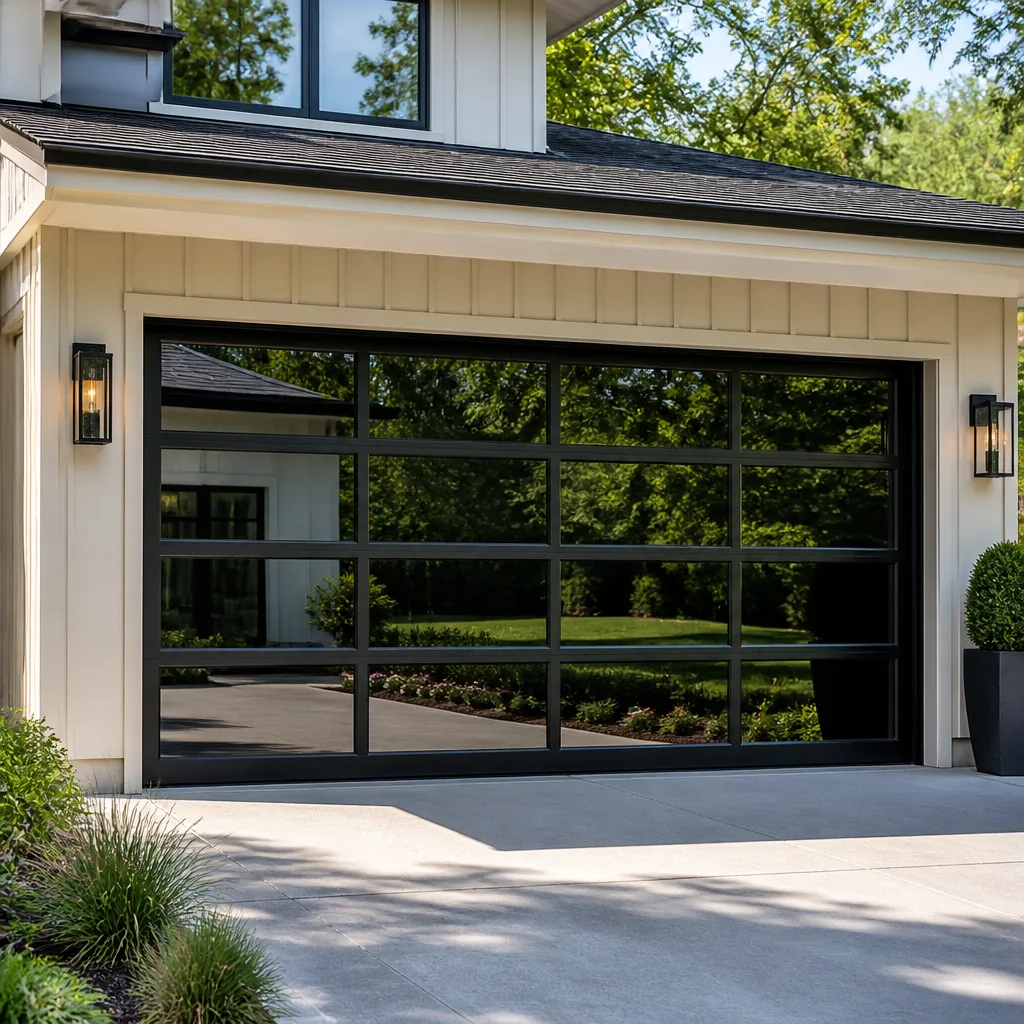 Full-view glass
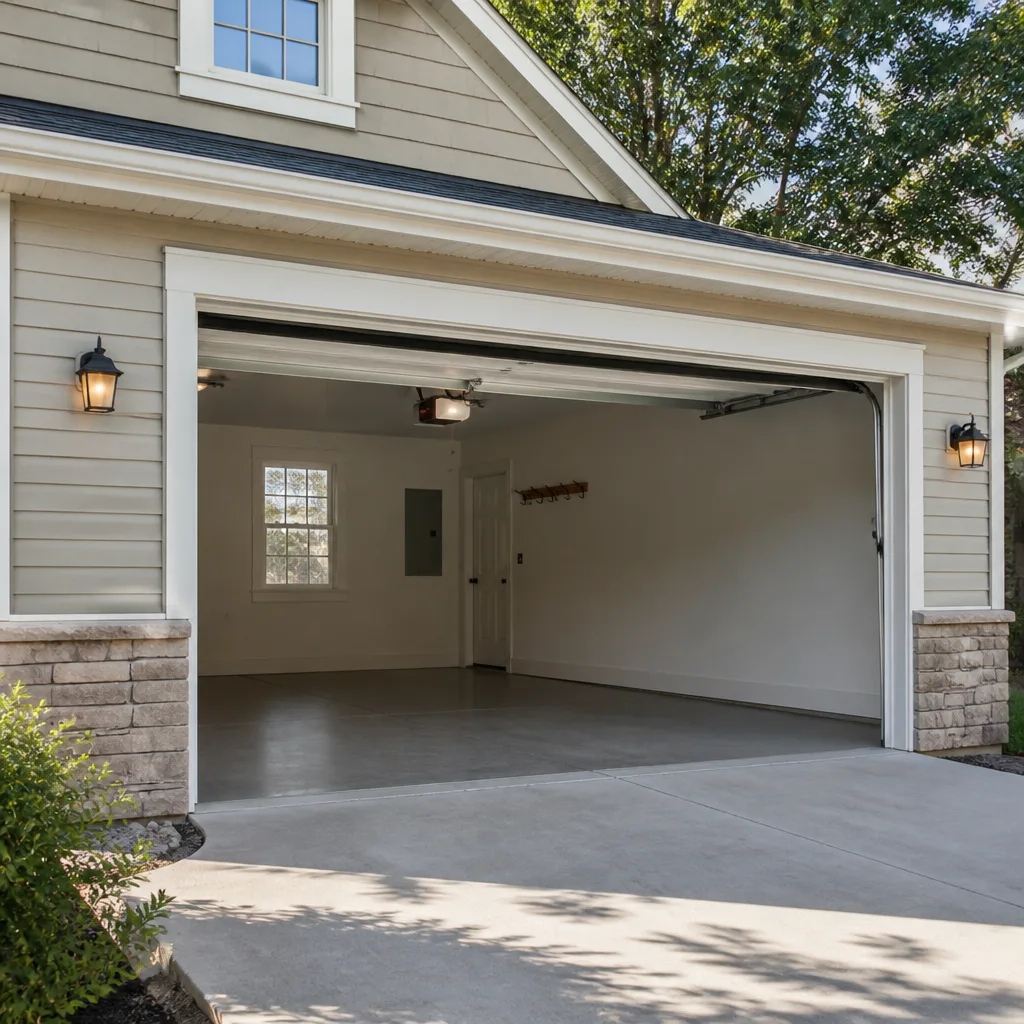 LiftMaster openers
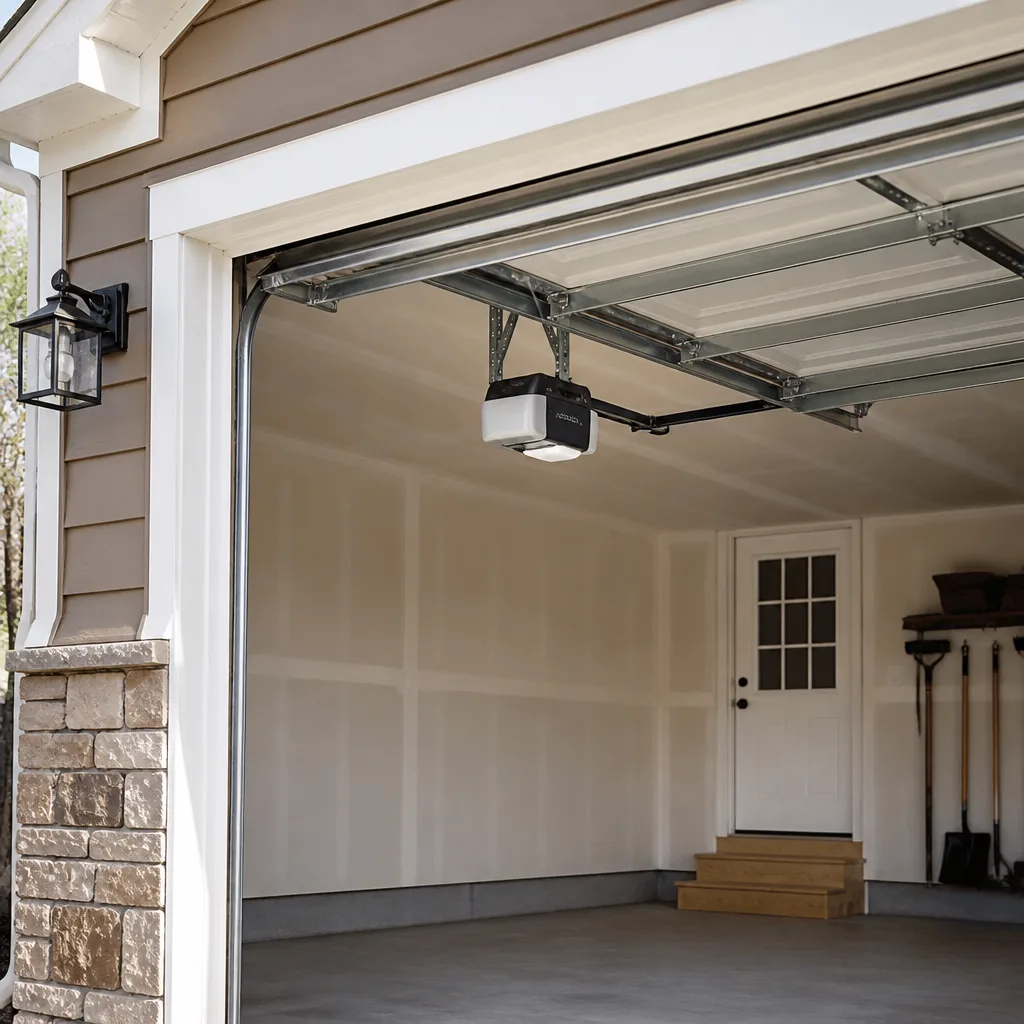 Chamberlain openers
Full 25-point door and opener safety check with every visit - springs, cables, rollers, tracks, and your LiftMaster or Chamberlain opener included
You get a price before we start. It does not change when the pro arrives.
Get your free estimateHow to Hire a Garage Door Contractor in Norfolk: A Step-by-Step Guide
Most homeowners in Norfolk hire a garage door contractor by asking one question: “Do you do spring replacements?” That question feels smart, but it’s easy to answer yes to. The real question is narrower and far more revealing: “Does the same technician who sets the spring also calibrate the opener travel limits?” When someone sets a torsion spring, the door’s balance changes, and the opener has to be re-tuned to match or it will strain, reverse at the wrong point, or fail early. In Norfolk, that one follow-up tells you whether you’re hiring a specialist who owns the whole job or a middleman who subs out the hard part. This guide walks through the vetting process, step by step, so you know exactly what to ask before anyone shows up at your door.
Quick Answer
Hire a full-scope garage door specialist, not a general handyman or a one-truck operator who outsources spring work. Verify the contractor’s Virginia license, ask who actually performs the spring and opener calibration, and insist on a written line-item quote before work starts. A specialist handles the door, springs, opener, and tracks under one warranty and one point of accountability, which protects you if something goes wrong later.
Styles & brands we work with
- Raised-panel steel
- Carriage house
- Modern flush
- Full-view glass
- LiftMaster openers
- Chamberlain openers
Table of Contents
- The Norfolk Contractor Market: Why Full-Scope Matters
- The Five Questions That Reveal a Specialist
- What Virginia Licensing Covers and How to Verify It
- Red Flags Specific to the Norfolk Market
- How to Read a Garage Door Quote
- Why Hiring for the Full Job Protects Warranty and Timeline
- How Norfolk’s Weather and Housing Shape the Job
- Common Mistakes to Avoid
The Norfolk Contractor Market: Why Full-Scope Matters
Norfolk has a lot of garage doors and a busy, fragmented contractor market to match. Drive through neighborhoods like Ghent, Larchmont, or Colonial Place and you’ll see a mix of detached garages on older lots and attached garages on mid-century homes, each with its own door system and opener brand. The problem isn’t a shortage of people who’ll answer the phone. It’s a surplus of one-truck operators who handle the easy jobs, like swapping an opener or lubricating rollers, and quietly sub out the technically demanding work, especially torsion spring replacement.
That split creates a specific headache. If the spring fails three weeks after the opener was serviced, who’s responsible? The person who touched the opener says the spring was someone else’s job. The person who set the spring says the opener was misadjusted. You’re left holding the bag between two contractors who never talked to each other. Full-scope capability closes that gap.
When one company handles the whole system, the accountability is simple: they touched it, they own it. At Norfolk Garage Door Repair Co, that’s the model we work from. Our technicians have up to 13 years of experience and are factory-familiar with eight major brands, including LiftMaster, Chamberlain, Genie, Clopay, Amarr, Wayne Dalton, Craftsman, and Raynor. When you call, we work on the brand already in your garage, not a generic stand-in. From opener to installation, one call covers it.
- One company for repair: Door, springs, opener, and tracks under a single visit and a single warranty.
- No hand-offs: The technician who diagnoses is the technician who fixes.
- No second opinions: You don’t pay for two service calls to solve one problem.
- Consistent accountability: If something fails after the work, there’s one number to call.
The Five Questions That Reveal a Specialist
The difference between a full-service specialist and a middleman who subs out the hard work comes down to five questions. Ask them before you book anything. The answers, not the sales pitch, tell you what you’re actually hiring.
- “Does the same technician who sets the spring also calibrate the opener travel limits?” A specialist says yes without hesitation. A middleman gets vague or says the opener is handled separately. This is the litmus test.
- “Which brands do you work on directly?” Look for named brands, not “all brands.” We service LiftMaster, Chamberlain, Genie, Clopay, Amarr, Wayne Dalton, Craftsman, and Raynor. If they can’t name brands, they’re likely guessing at parts.
- “Do you replace torsion and extension springs in-house, or sub that out?” Spring work is the highest-risk part of the trade. A specialist does it in-house with a trained technician. A reseller farms it out.
- “What’s your written quote process, and are line items broken out?” A specialist breaks out parts, labor, and any opener adjustment. A flat-rate quote hides future upsells.
- “Who handles the warranty if a part fails, you or the manufacturer?” The right answer is clear about who you call, who pays, and how fast. Vague warranty answers are a warning sign.
Ask these in order and listen for consistency. A contractor who trips on question one isn’t going to get more confident by question five. If a company can’t tell you who calibrates the opener after a spring job, that’s all you need to know about whether they’re a specialist or a middleman.
What Virginia Licensing Covers and How to Verify It
Virginia regulates contractors through the Department of Professional and Occupational Regulation (DPOR), and garage door work generally falls under the contractor licensing rules tied to the scope of the job. Here’s the part that matters for you: a license, a business license, and proof of insurance are three different things. You want all three. A contractor can hold a valid license while carrying no liability coverage, and that gap lands on you if something gets damaged.
Verification takes about a minute. Use the DPOR license lookup on the state’s website and search the business name or license number directly. Confirm three things:
- The license is active, not expired or suspended.
- The classification matches the work. Confirm the contractor is licensed for the type of work you’re hiring.
- The name on the license matches the name on the quote. A mismatch, like a subcontractor’s name on the paperwork, is a flag to ask about.
Then ask for a Certificate of Insurance showing general liability. A serious contractor produces it without drama. If someone says “we don’t need that for this job,” that’s your answer.
One more local note: garage door replacement can trigger permit questions depending on the scope and how the door is anchored to the structure. Rules vary, so ask your contractor how they handle permits, and if you’re unsure, check with the City of Norfolk’s building department before work starts. A specialist will know the process or tell you plainly who to ask.
Red Flags Specific to the Norfolk Market
Norfolk sits on water that produces hurricanes and nor’easters, and storm season brings out crews that aren’t local specialists. Some are legitimate storm-response contractors. Others are unlicensed operators who blow into town after a storm, offer a quick fix for a door that was knocked out of alignment, take payment, and disappear before the problem surfaces. If a company’s only address is a PO box or a cell number and their work history isn’t local, be cautious.
Watch for these specific red flags:
- Unlicensed storm-chaser crews after a hurricane or nor’easter. Ask for a Virginia license number and verify it. A legitimate contractor won’t mind the check.
- “We do everything” language. A garage door specialist should sound like a garage door specialist, not a general contractor taking whatever comes in.
- Cash-only or full-payment-upfront demands. Deposit-only, cash-only, or pay-it-all-now pressure is a classic warning sign, especially after storm damage.
- No local phone number or verifiable address. A cell number and a website with no physical presence is hard to hold accountable.
- Quotes that skip the spring inspection. A contractor who quotes a spring replacement without looking at the door’s balance and tracks is guessing.
- Pressure to replace the whole door when only a part failed. Sometimes the door needs replacement. That should be a clearly explained recommendation, not the only option offered.
The pattern across all of these is the same: a stranger with a fast pitch and no verifiable local accountability. The verification steps above are your defense.
How to Read a Garage Door Quote
A garage door quote tells you as much about the contractor as the price does. Line-item quotes signal a contractor who knows the job inside and out. Flat-rate quotes hide the details, and flat-rate quotes tend to hide future upsells too, because you can’t see what wasn’t included.
Here’s what a solid quote should break out:
- Parts – springs, cables, rollers, track, opener components, each with the brand named if applicable.
- Labor – separate from parts, so you can see what the work itself costs.
- Spring balance and adjustment – a real spring job includes setting the door to balance, not just swapping the spring.
- Opener calibration – travel limits and force settings reset after the spring change.
- Safety inspection – the reversal test and a look at hinges, rollers, and track alignment.
- Cleanup and disposal – what happens to the old parts.
A quote that’s a single number with no breakdown is a quote you’ll want to question. Ask what’s included and what isn’t. A contractor confident in the job can walk you through it in plain language. That’s also the moment to lock in the price: the written estimate sets the final price, and the price is quoted and agreed before any work starts. Once you’ve agreed on scope and written price, the number shouldn’t move.
If you’re weighing a repair against a full replacement, our garage door repair page lays out the decision in practical terms.
Why Hiring for the Full Job Protects Warranty and Timeline
The biggest reason to hire one company for the whole job, rather than piecemeal, is warranty coverage. Garage door parts carry manufacturer warranties, but those warranties can be affected by how the parts are installed and adjusted. If one technician installs a spring and a different contractor adjusts the opener, and the opener fails because the door’s weight is off, both contractors can point at each other. The manufacturer won’t resolve that for you. When one specialist handles installation and adjustment, the warranty trail stays intact and the accountability stays with that company.
Timeline works the same way. A split job means scheduling two contractors, waiting on two windows, and coordinating who does what. A one-company job means one visit in most cases:
- One call for diagnosis – the specialist inspects the full system: springs, cables, tracks, rollers, and opener.
- One written quote for the whole scope – no “we’ll look at the opener after.”
- One visit for the work – springs set, opener calibrated, tracks aligned, door balanced.
- One final test – reversal and force checks on the spot, confirmed with you before the technician leaves.
Same-day repair is often possible when the parts and scope allow. For a full door replacement, the job is scheduled: you get a free measure and a written price, the door is ordered, and installation is booked. Either way, one company means one timeline to track. Our garage door installation page covers how a measured replacement runs from start to finish.
How Norfolk’s Weather and Housing Shape the Job
Norfolk’s climate puts real stress on garage door hardware. Summers run hot and humid, and that humidity works on steel springs, hinges, and rollers. Cold snaps in winter add their own strain, and a spring that’s been slowly weakening in summer heat can let go on the first cold morning of the year. That pattern is why spring failures cluster around seasonal shifts, and why a specialist who works in Norfolk regularly can often tell you why a door failed just by looking at the hardware.
The housing stock matters too. Older neighborhoods around the city have plenty of single-car and carriage-style garages, some with doors and openers that have been adjusted many times over the years. On those older systems, a quick fix without calibration is a short-term patch. Tracks drift, hinges wear unevenly, and openers get dialed too hard to compensate. Calibration at the end of every job is what keeps the system working together instead of fighting itself.
A local specialist also knows the practical side: what replacement parts are available for older Amarr, Wayne Dalton, and Raynor doors, and when an older door is worth repairing versus replacing. That familiarity shortens the repair timeline, because the technician isn’t guessing at parts availability from a book.
One more climate note: storm season, hurricane season especially, tends to produce a burst of “garage door repair” offers from crews with no local track record. The licensing and verification steps in this guide are your best defense when the market gets crowded with strangers.
Common Mistakes to Avoid
- Asking only “do you do springs?” The question is easy to say yes to. Ask who calibrates the opener after the spring job. The answer is what separates specialists from middlemen.
- Hiring on price alone. A low flat-rate quote that doesn’t break out parts, labor, and adjustment is often the start of an upsell. Compare line items, not just totals.
- Skipping the license check. “We’re licensed” isn’t verification. Search the business name on the state DPOR lookup and confirm it matches the quote and the insurance certificate.
- Letting one contractor do springs and another do the opener. Split accountability is the fastest way to get stuck between two contractors who won’t own the failure.
- Ignoring the permit question on a new door. Anchor and structural changes can require permits. Ask the contractor how they handle it, and check with the city’s building department if you’re unsure.
- Booking a storm-season crew you can’t trace. After a hurricane or nor’easter, verify the license and the local address before handing over money. Storm-chasers are a Norfolk-specific risk.
- Paying in full before work starts. A written quote, a clear scope, and payment terms tied to completed work are standard for a real contractor.
See the difference
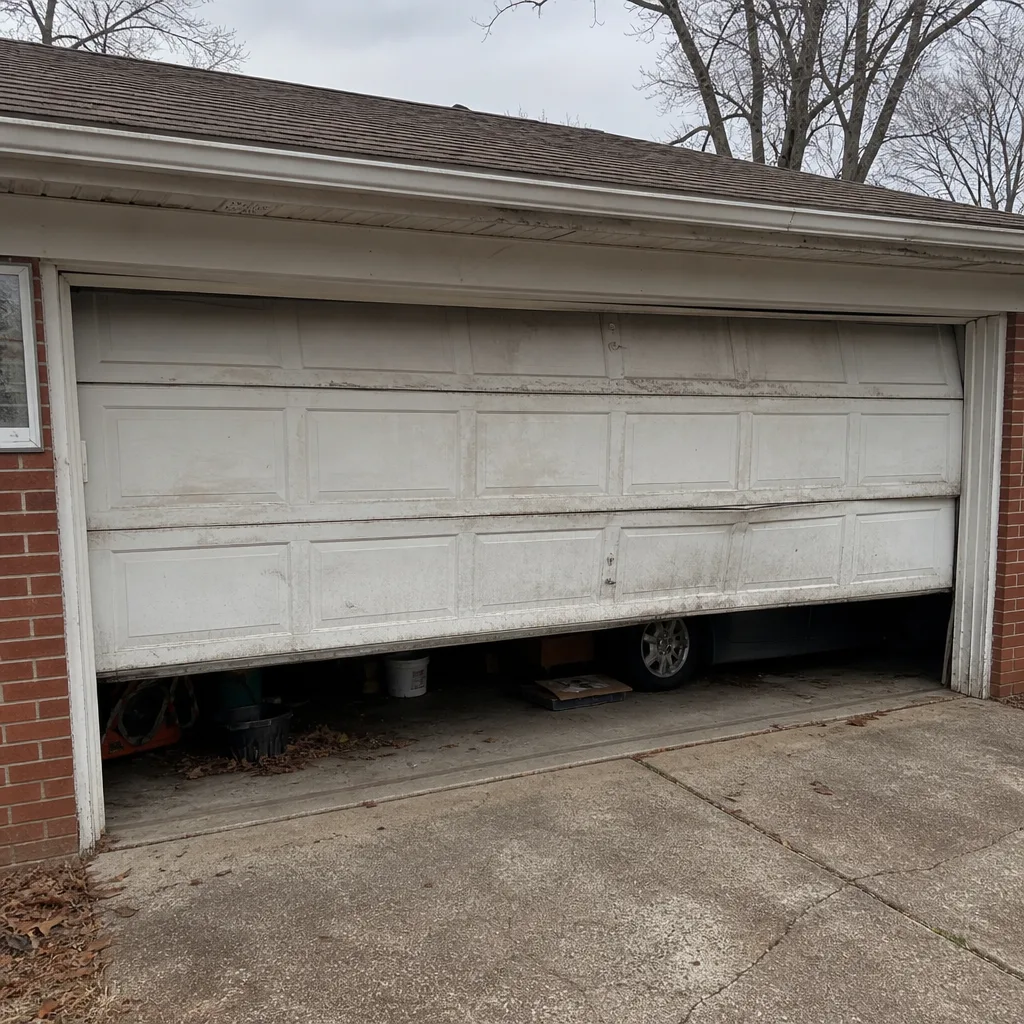 Before
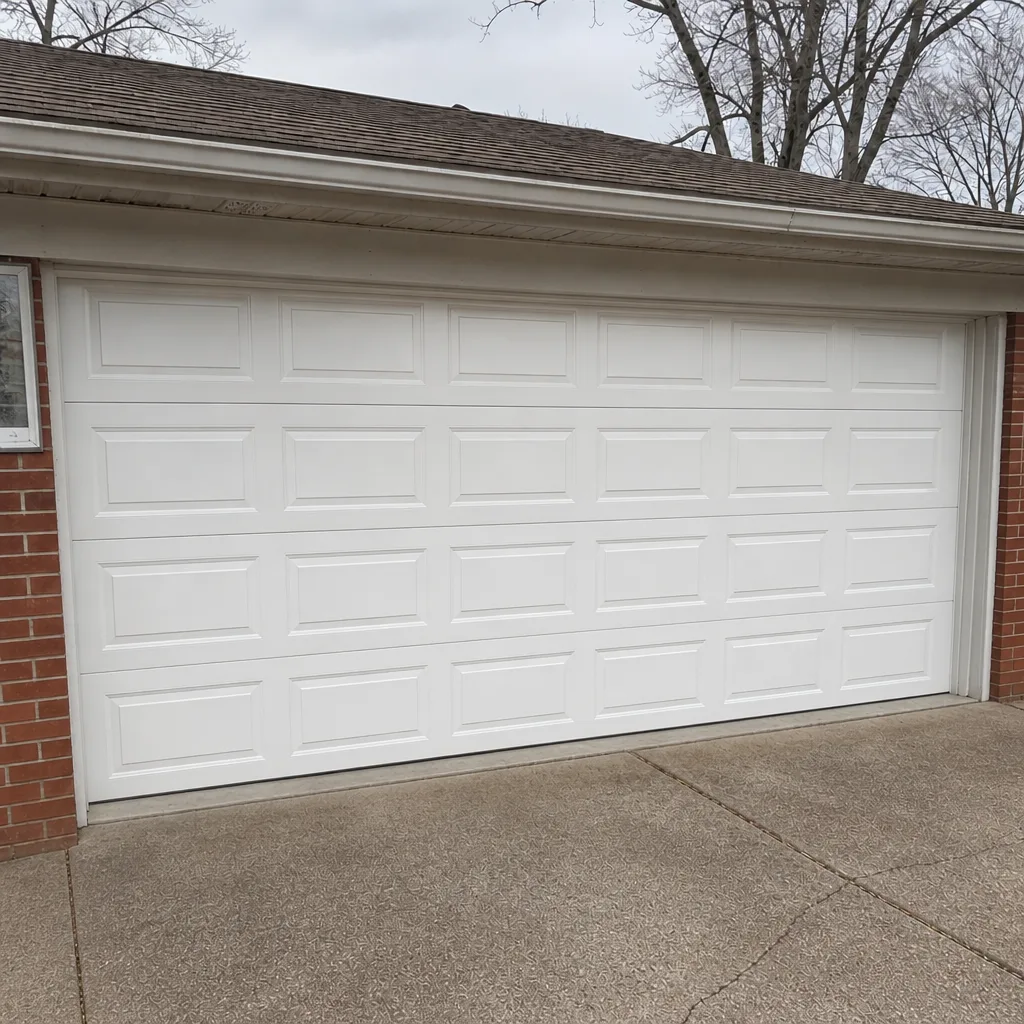 After
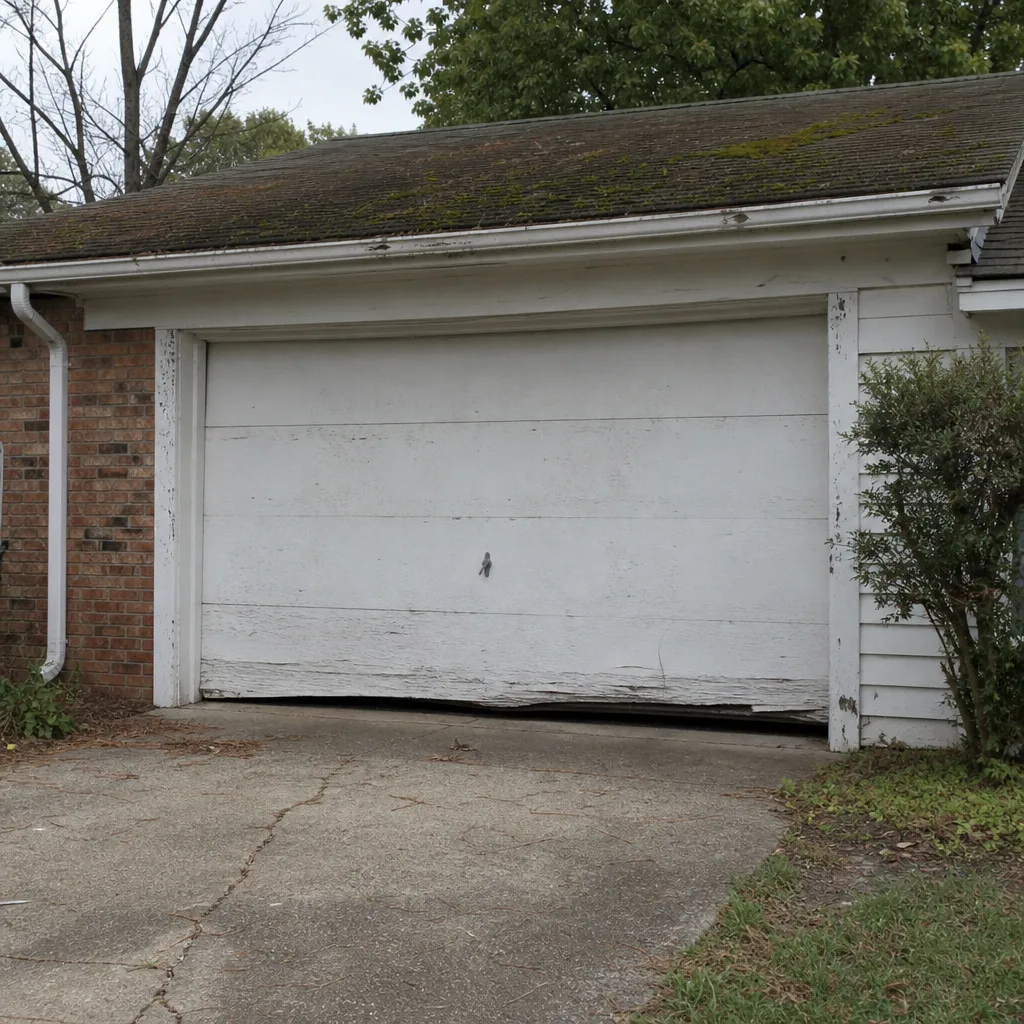 Before
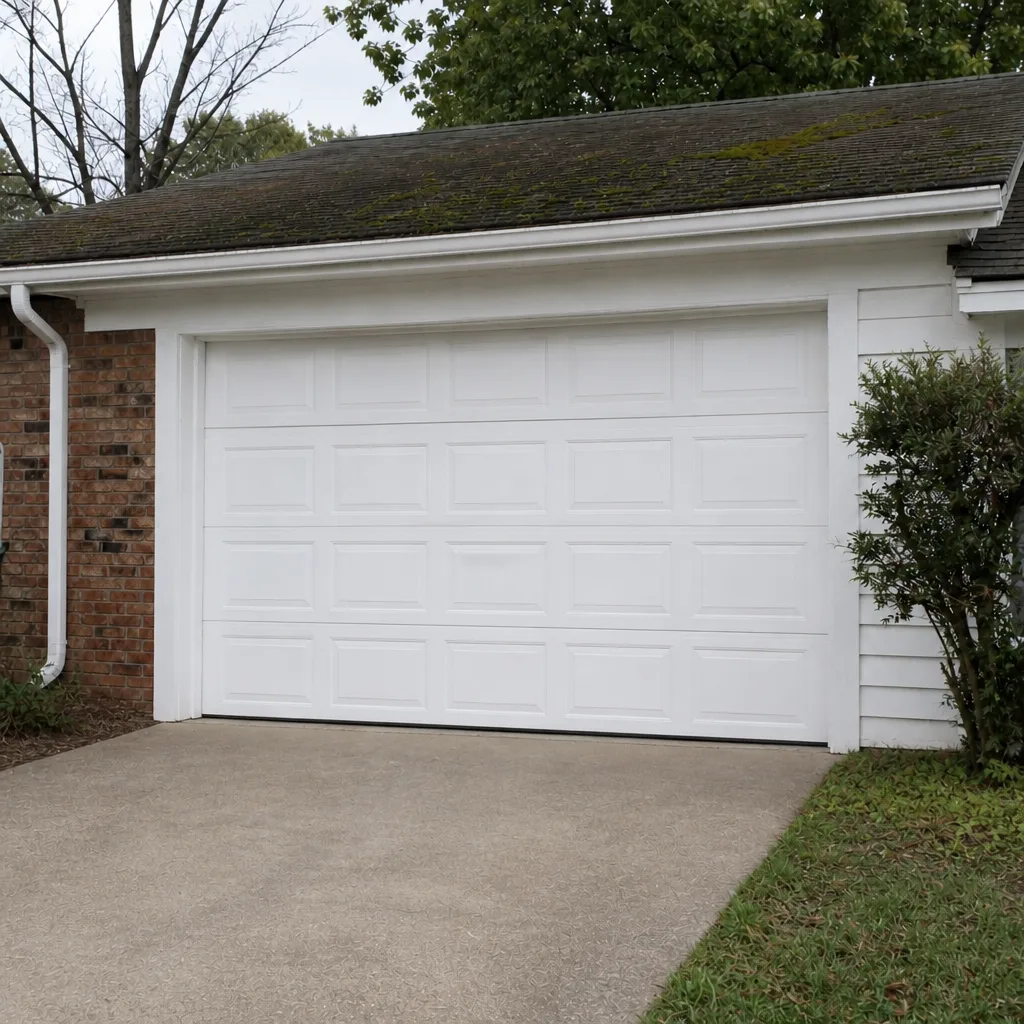 After
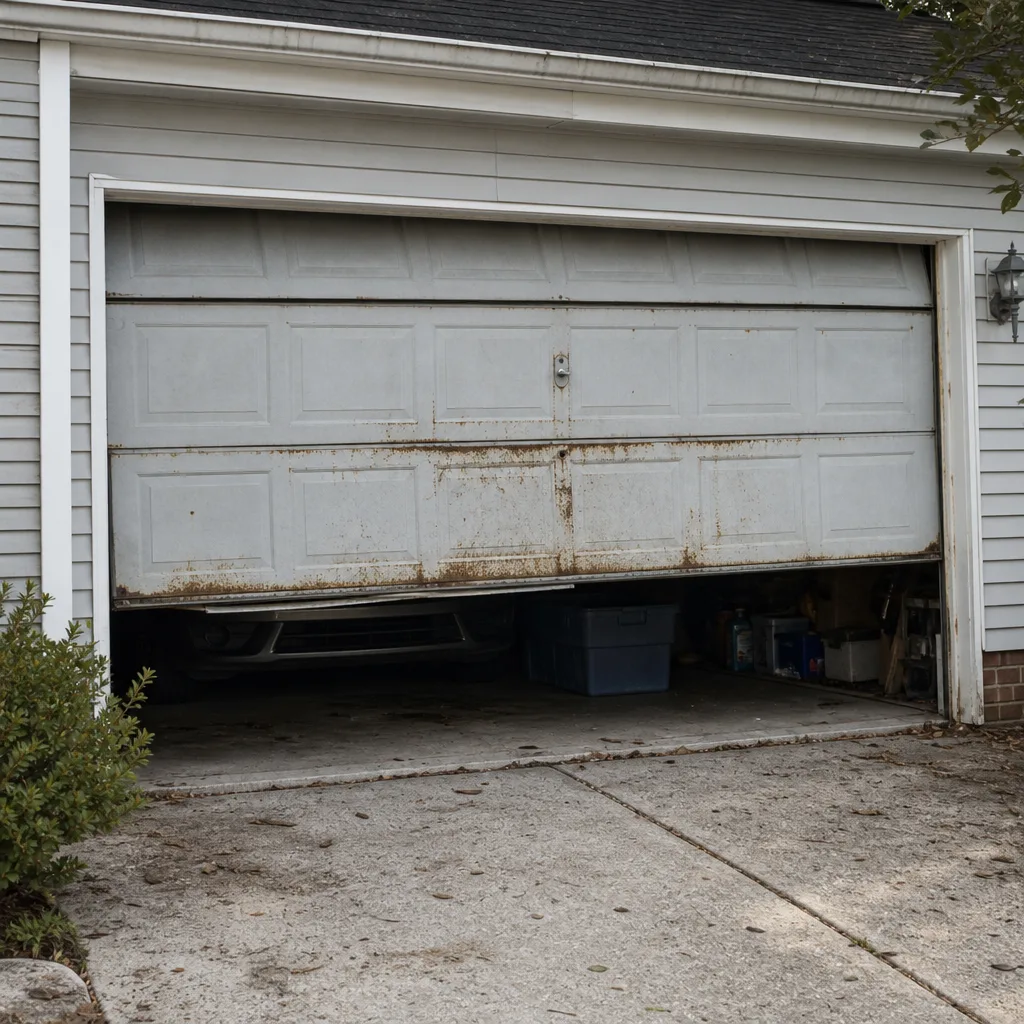 Before
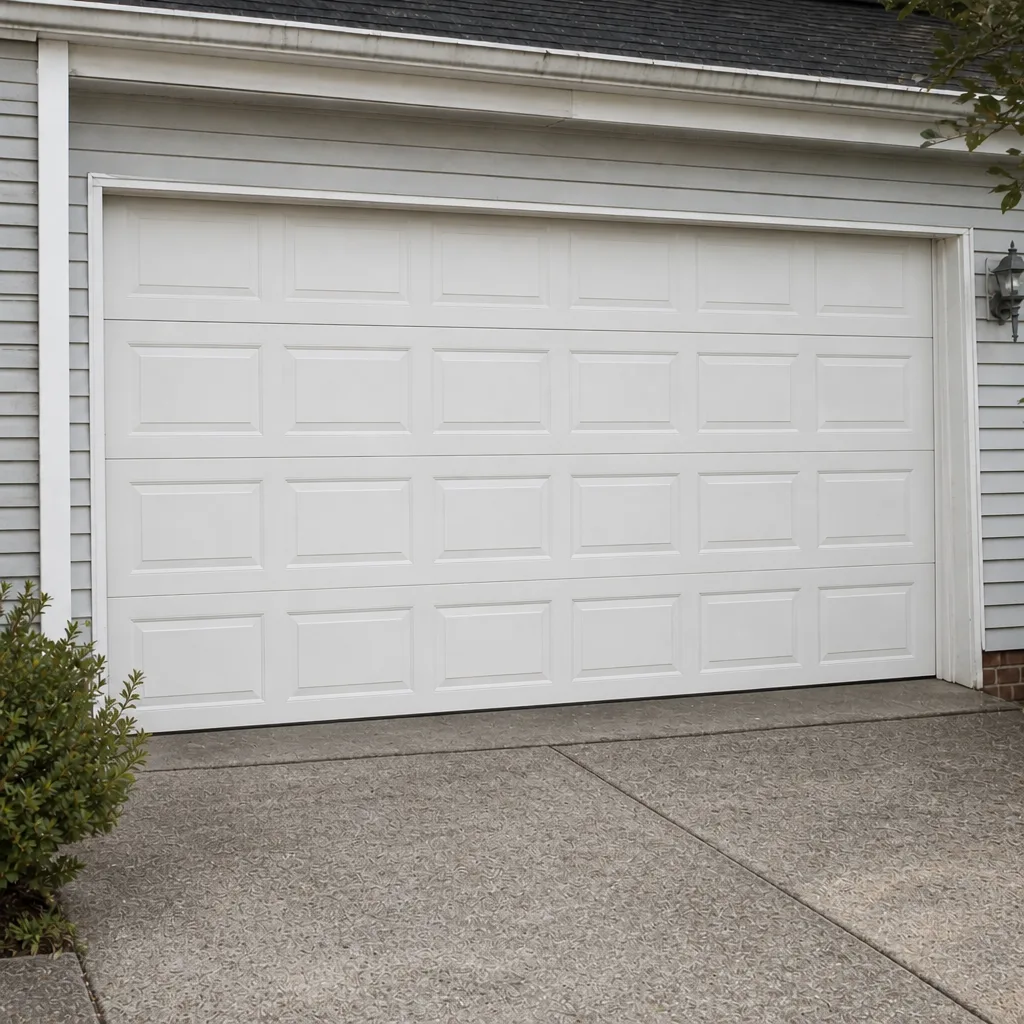 After
When to Call a Professional
Some garage door jobs are safe to handle yourself: lubricating hinges and rollers, wiping down the door, testing the reversal feature by putting an object in the door’s path. Everything involving the springs, cables, or opener wiring is a different category. Torsion and extension springs are under high tension. If a spring or cable is involved, call a professional, full stop. A trained technician knows the safe sequence and has the tools to control the tension. A homeowner does not.
Call a specialist if your door won’t open or close, if you hear a loud bang from the garage, if the door is crooked or hanging off one side, if the opener runs but the door doesn’t move, or if the door reverses before it reaches the floor. A door stuck half-open is a security issue, not a tomorrow problem, which is why emergency garage door service is part of our core offering. Spring repair is the highest-risk repair in the trade and one we approach with the care it demands. Norfolk Garage Door Repair Co offers free estimates in Norfolk – call (877) 831-7441.
Frequently Asked Questions
Cost depends on the job and the parts, so a written estimate is the only reliable number. Typical repairs come in as an estimate range based on the scope: how many parts are involved, which brand, and what the door needs once a technician looks at it. The written quote is the price, and it’s quoted and agreed before any work starts. Call (877) 831-7441 for an exact quote – estimates are free.
Often, yes. When your door won’t move, we will prioritize it, and same-day repair is common when parts and scope allow. A door that’s stuck closed locks you in, and a door stuck open leaves your home exposed, so we treat those as urgent. Call (877) 831-7441 and we’ll tell you what’s available.
No. The written estimate sets the final price, and we don’t start work until you’ve agreed to it. If a technician finds something that changes the job, they explain it and get your approval before doing anything extra. What you agree to in writing is what you pay.
The local pro who performs the work is licensed and insured as their state requires, and you can verify the license on the state DPOR lookup before work starts. Ask for the Certificate of Insurance too; a legitimate contractor provides it without hesitation. Call (877) 831-7441 with any verification questions.
We’re factory-familiar with eight major garage door and opener brands: LiftMaster, Chamberlain, Genie, Clopay, Amarr, Wayne Dalton, Craftsman, and Raynor. That includes openers across the major drive types, so no brand gets turned away. If your system isn’t on the list, call (877) 831-7441 and we’ll tell you straight whether it’s a job we take.
Repair makes sense when the structure is sound and one component failed, like a spring or an opener. Replacement makes more sense when the door is damaged across multiple panels, the tracks are bent beyond alignment, or the hardware is failing in several places at once. A technician can give you a clear recommendation with line items for both options. Call (877) 831-7441 for a free estimate.
Both. Opener repair and calibration are part of every spring and door job, not a separate call. That’s the full-scope model: the same technician who sets the spring recalibrates the opener’s travel limits and force settings before leaving. Our garage door opener repair page covers the opener side in detail.
The Bottom Line
Hiring a garage door contractor in Norfolk comes down to one question: full-scope specialist or middleman? Verify the license, ask who sets the spring and who calibrates the opener, insist on a written line-item quote, and treat storm-season crews without a local track record with skepticism. A specialist handles the door, springs, opener, and tracks under one warranty and one point of accountability, which shortens repair timelines and closes the gap where split jobs fall apart. If your door is stuck, or you’re ready to replace it, we can help. When your door won’t move, we will. Norfolk Garage Door Repair Co offers free estimates in Norfolk – call (877) 831-7441 for a free estimate.
Written by the team at Norfolk Garage Door Repair Co.