Last updated November 21, 2026
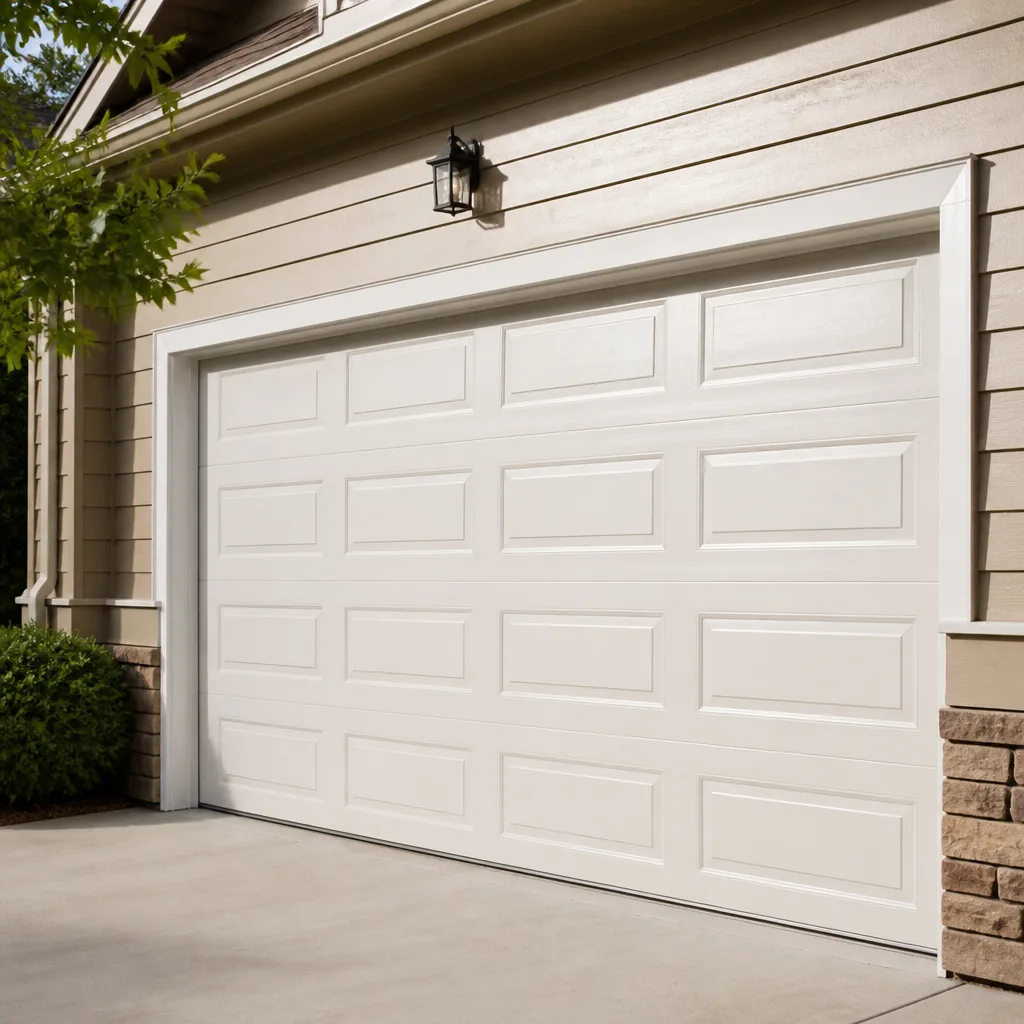 Raised-panel steel
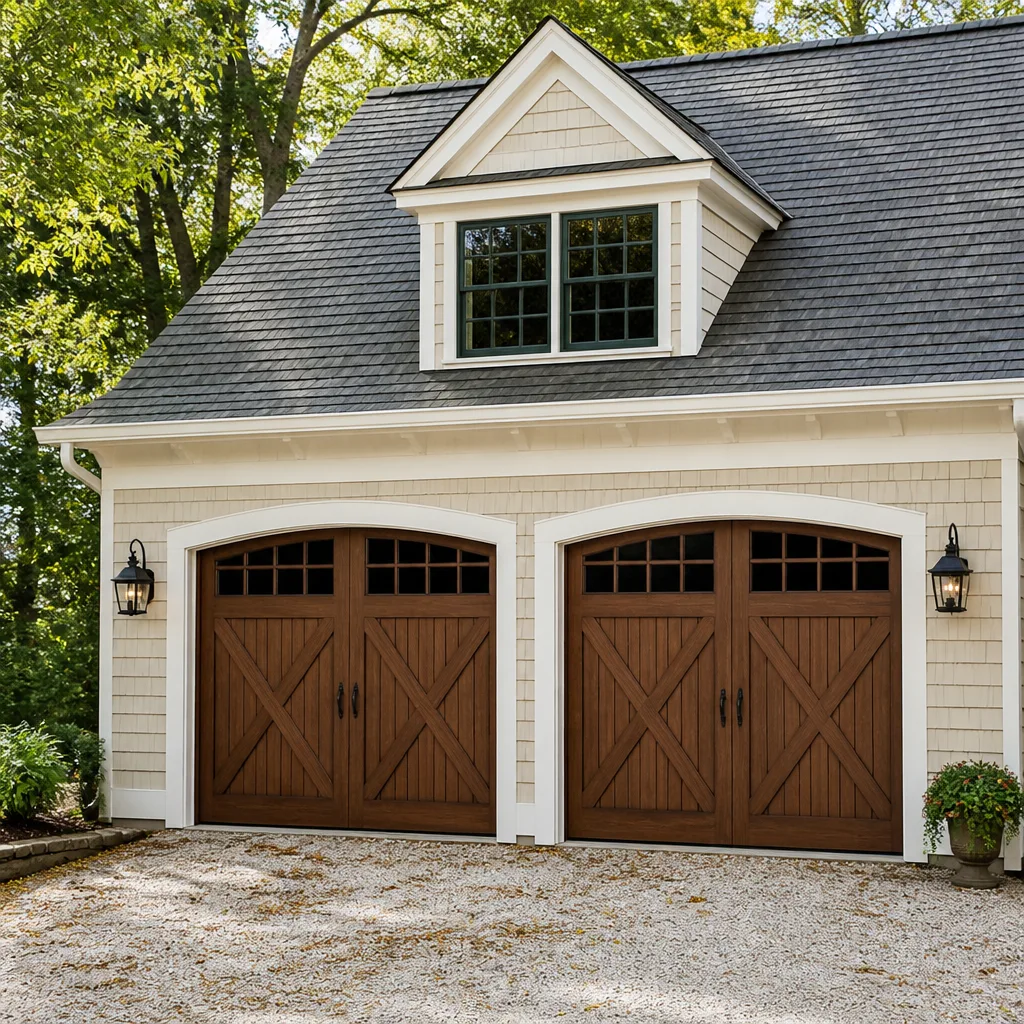 Carriage house
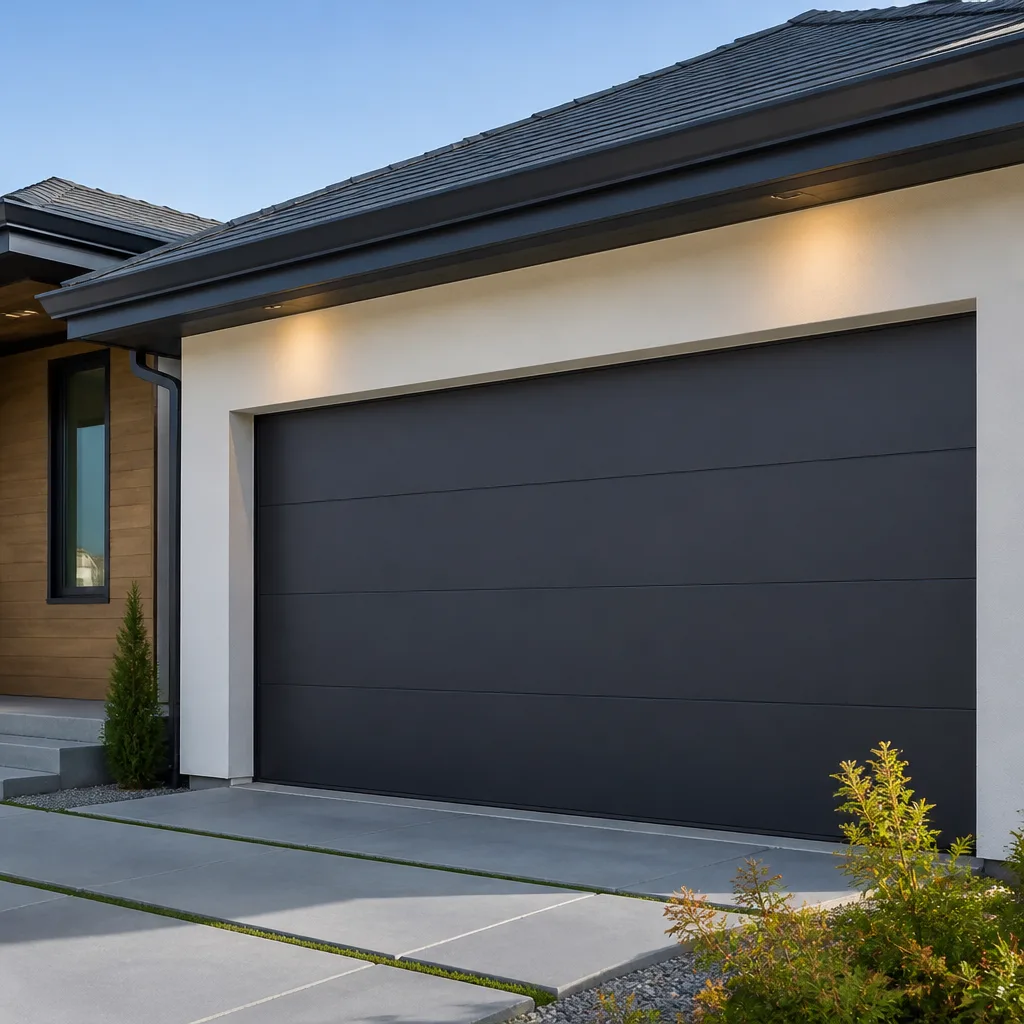 Modern flush
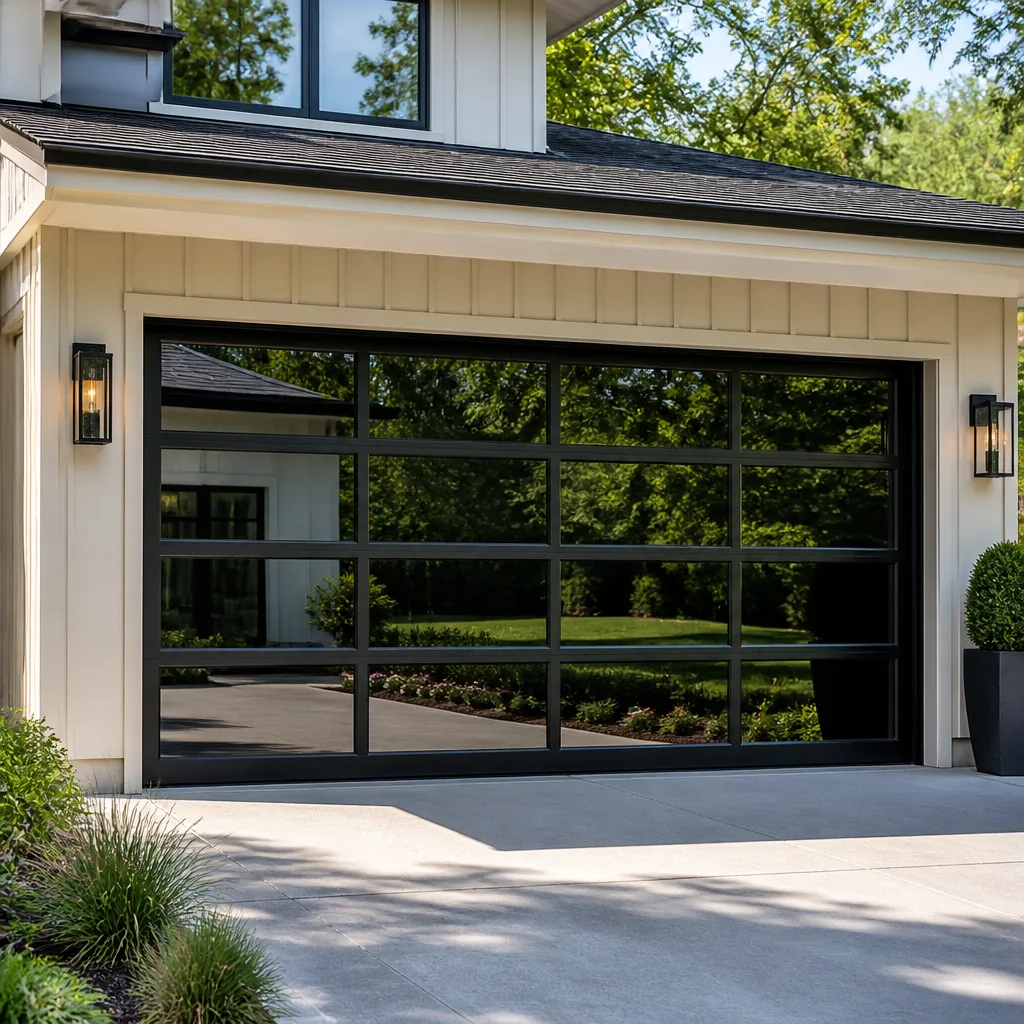 Full-view glass
 LiftMaster openers
 Chamberlain openers
Full 25-point door and opener safety check with every visit - springs, cables, rollers, tracks, and your LiftMaster or Chamberlain opener included
You get a price before we start. It does not change when the pro arrives.
Get your free estimateGarage Door Emergency Preparedness Guide for Norfolk Homes
Most homeowners treat a garage door failure as a repair problem. It’s actually two problems wearing the same coat, and they demand opposite responses. When water is coming in or wind is pushing at the opening, your first job is to secure the house. When a spring snaps at ten at night with the car inside, your first job is to get the door open without hurting yourself or wrecking the opener. Confusing the two is where things go wrong. This guide walks Norfolk homeowners through both protocols, from the red manual release cord to the information that speeds up an emergency call.
Quick Answer
A garage door emergency in Norfolk usually falls into one of two buckets: a storm failure where you need to secure the opening, or a mechanical failure where you need safe manual operation. Learn where your manual release cord is, never pull it if a spring is broken, and keep a small kit of board and screws ready for storm season. Call a specialist for anything involving springs, cables, or a door that won’t stay on its tracks.
Styles & brands we work with
- Raised-panel steel
- Carriage house
- Modern flush
- Full-view glass
- LiftMaster openers
- Chamberlain openers
Table of Contents
- The Two Kinds of Garage Door Emergencies in Norfolk
- How to Use the Manual Release Cord Safely
- The Costly Mistake: Releasing the Door Under a Broken Spring
- How to Temporarily Secure a Garage Door Opening After Storm Damage
- Pre-Hurricane Garage Door Checklist for Norfolk Homes
- How to Reconnect Your Opener After a Manual Override
- What to Tell an Emergency Technician When You Call
- Common Mistakes to Avoid
- When to Call a Professional
- Frequently Asked Questions
The Two Kinds of Garage Door Emergencies in Norfolk
Before you can react well, you need to name what’s happening. In Norfolk, calls we field split cleanly into storm-driven failures and mechanical failures, and the priorities are different. Storm failures ask one question: can you keep the weather out of the house? Mechanical failures ask a different one: can you get the door into a safe, controllable position without a spring or cable releasing?
Storm-driven emergencies usually involve wind pushing water past a door that’s stuck partway, a power outage during a nor’easter, or a panel bowed by impact. The door may still function mechanically. What matters most is closing the opening to whatever extent possible and getting the system looked at before the next front moves through.
Mechanical emergencies include snapped torsion or extension springs, a door off its tracks, cables that have come loose, and openers that have quit mid-travel. Here, the door itself may be fine, but forcing it wastes the drive mechanism and creates a genuine injury risk.
Here’s the short version of both protocols:
- Storm failure: secure the opening first, then call.
- Mechanical failure: stop moving the door, check whether a spring is broken, then decide on manual release.
- Either way: don’t force anything. Most damage from emergencies happens in the ten minutes after the failure, not during it.
Knowing which bucket you’re in is the single most useful piece of emergency preparedness a Norfolk homeowner can carry. Everything else below builds on it.
How to Use the Manual Release Cord Safely
The manual release cord is a red handle, usually hanging from the opener’s carriage or trolley, that disconnects the door from the motor so you can lift it by hand. It’s designed for exactly two situations: a power outage with the door closed, and an opener that has failed with the door in the down position. It is not designed to bail you out of a broken spring or a door that’s jammed.
Here’s the sequence most manufacturers design around:
- Make sure the door is fully closed before you pull the cord. Most release mechanisms are safe to disengage only with the door down and the spring tension properly loaded.
- Stand to the side of the door, not under it, and pull the cord down and toward the door. You’ll hear or feel the trolley release.
- Lift the door with a firm, even pull from the bottom panel. It should move with a manageable weight. If it feels heavy or won’t budge, stop.
- Prop or hold the door up with a sturdy brace if you’re walking away from it. An unsupported manual door can drop.
If your door has a broken spring, none of the above applies. Skip ahead to the next section.
This is also where we separate the brands. A LiftMaster or Chamberlain trolley releases with a clean single pull. Some Genie and Craftsman models have a slightly heavier latch. Clopay doors with certain torsion setups lift differently than an Amarr door with extension springs. We work on the brand already in your garage, which is a real advantage when you’re on the phone at midnight, because we can walk you through the specific release on your model. If you can tell us the brand and the model number, you’re already ahead.
The Costly Mistake: Releasing the Door Under a Broken Spring
Pulling the manual release cord when a torsion or extension spring is broken is the most common dangerous mistake we hear about. It’s understandable. The cord feels like the emergency brake for every situation. It isn’t. When a spring is broken, the door’s weight is resting on whatever still holds it, and releasing the opener can take away the only counterbalance holding the door in position. A door that drops without a spring can come down on a person, a car, or a pet.
How do you know a spring has failed? There are clear signs:
- A loud snap from inside the garage, often followed by silence.
- The door is stuck partway up or down and won’t move when you trigger the opener.
- You can see a visible gap in a torsion spring above the door, or a stretched, hanging extension spring beside the tracks.
- The opener strains or hums without moving the door.
If any of these are true, treat the door as unsafe until a trained technician looks at it. Don’t pull the release. Don’t lift the door by hand. Don’t park under it. This is a call-in-the-professional situation, not a work-it-out-yourself moment. Torsion springs store enormous energy even when they look calm, and touching one is a serious injury risk.
Spring repair is a named service at Norfolk Garage Door Repair Co because it’s a different kind of job than a tune-up. If you’re not sure whether your spring has failed, describe what you see when you call and we’ll help you decide whether it’s an emergency or a scheduled visit. Our technicians have up to 13 years of experience and have seen every spring failure combination that comes through Norfolk homes.
How to Temporarily Secure a Garage Door Opening After Storm Damage
When a door panel is punched out or the tracks are bent so the door won’t close, the priority is stopping the weather. A garage opening that stays open long enough in a Norfolk rain event lets water reach everything stored on the floor, and in wind it’s a path for debris into the house. Temporary boarding is a real option, but you want to do it in a way that doesn’t add damage.
Here’s what generally works:
- If the door is still on its tracks but won’t fully close, don’t force it. A half-closed bent door can drop. Make sure no one is underneath and treat it as a fixed object.
- Measure the opening and cut exterior-grade plywood or OSB to cover it with an inch of overlap on each side.
- Screw the board through the door’s framing or the opening’s trim, not through the door panels themselves. Screwing into glass or a hollow panel is where people crack things that were repairable.
- Seal the edges with heavy plastic sheeting and exterior tape to keep blowing rain out.
- Pull anything moisture-sensitive off the garage floor and away from the opening.
A word on building codes: many localities require a permit for structural changes to a garage opening, and some Norfolk neighborhoods with historic designation have their own rules about visible exterior materials. If your temporary board is going to stay up more than a few days, call your city’s building department and ask what’s allowed. We can’t give you code approval from a phone, and neither should anyone else. What we can do is get the actual door fixed so the board comes down.
Pre-Hurricane Garage Door Checklist for Norfolk Homes
Hurricane season runs from June through November, and Norfolk sits at what the building code calls a wind-borne debris region, which is why the code asks more of doors here than it does inland. A garage door is the largest opening on most homes, and it’s the one that most often fails first under wind load. Ten minutes of inspection before the season pays for itself.
Walk through this checklist before a storm is forecast:
- Springs and cables: Look for gaps in torsion springs or sagging extension springs. Snapped springs under wind load make the door useless at the worst time.
- Tracks: Run your hand along the vertical and horizontal tracks. Any bend, dent, or gap lets the rollers jump.
- Rollers and hinges: Worn nylon rollers click or wobble. Loose hinges let panels flex under pressure.
- Bottom seal: A torn bottom seal lets wind-driven rain in and reduces the door’s grip against the frame.
- Automatic opener: Test the safety reverse by placing a 2-by-4 flat on the ground in the door’s path. The door should reverse on contact.
- Wind rating: If your door was installed before current wind-borne debris standards took effect, it may not have a rated design pressure. A Clopay or Amarr replacement door rated for this region is one of the most direct upgrades you can make for storm resilience.
If any item on this list is failing, that’s the time to schedule a repair – not after the storm watch goes up. There’s a reason we tell Norfolk homeowners to book garage door repair in the spring: a door that’s sound in June is a door that survives in September. And if you’re already doing the inspection and thinking about a new door, a free measure and written estimate on garage door installation is the natural next step, because that work is measured and scheduled rather than rushed.
How to Reconnect Your Opener After a Manual Override
Reconnecting after a manual release is where a lot of homeowners accidentally damage the drive. The trolley has to be re-engaged with the opener’s carriage, and if the door and carriage aren’t aligned, the motor will pull against a jammed mechanism. Here’s the sequence to follow when you’re ready to bring the opener back online.
- Close the door fully by hand. The door has to be in the down position so the trolley can meet the carriage.
- Pull the release cord outward horizontally (away from the door) or in the direction marked on your opener. You should feel the trolley snap back onto the carriage.
- Press the wall control or remote once. Watch the door move through one full cycle. If it stops or reverses immediately, the trolley isn’t fully seated – press the release again and repeat.
- Run the safety reverse test with the 2-by-4 before you trust the door to close on people or cars again.
On a Wayne Dalton or LiftMaster opener, the re-engagement point is usually obvious once you’re looking at the trolley. On some older Craftsman and Genie units, the carriage has to be at a specific point in its travel before the trolley will catch. If the door has been manually operated more than a few times, the opener’s travel limits may need to be reset. That’s a service call, not a self-fix. Call us for garage door opener repair if the door moves unevenly or the opener strains after reconnection – it usually means the drive gear or limit switch has drifted.
What to Tell an Emergency Technician When You Call
Three pieces of information shorten an emergency visit faster than anything else, and they all live on your opener or your door. Have them ready before you dial. The technician who takes your call uses them to load the right parts before leaving for your address, which is the difference between a one-visit fix and a return trip.
1. The door and opener brand and model. Every opener has a label on the back or under the light cover. Every door brand we work on – LiftMaster, Chamberlain, Genie, Clopay, Amarr, Wayne Dalton, Craftsman, Raynor – has a tag or a sticker on the inside of the door panel or the top section. Snap a photo of both labels before you call.
2. What the door is doing right now. “Stuck halfway up and won’t move” tells a different story than “closed fine but opener runs and door doesn’t move.” Be specific about whether you can see a broken spring or a loose cable.
3. Whether you’ve already overridden the opener or moved the door by hand. This is critical. If the manual release has been pulled and the door has been lifted, the tech needs to know before showing up. It changes what tools and parts go on the first visit.
If you can also tell us the door size and whether it’s a single or double car door, we’ll have the right spring in the kit. Norfolk Garage Door Repair Co offers emergency garage door service as a core part of what we do – when your door won’t move, we will. Call (877) 831-7441 and tell us the three facts above.
Emergency vs. Same-Day vs. Scheduled: Which Is It?
Not every problem is an emergency. Deciding correctly saves you money and frees service capacity for the homes that actually need an immediate visit. Here’s how we think about triage when a Norfolk homeowner calls us.
True emergency: A broken spring with the car trapped inside. A door stuck open with the house exposed to weather. A door off its tracks and hanging. A cable has come loose. A door that moves on its own or won’t stop.
Same-day service: An opener that won’t respond but the door moves by hand. A safety reverse that has stopped working. A remote or wall control that has quit. A door that binds loudly through its cycle.
Scheduled: A noisy door that still works. A worn bottom seal. A door that needs its annual lubrication and balance check. Prep for hurricane season. A new installation, which is measured and ordered rather than same-day.
One thing that’s always an emergency regardless of timing: anything involving a spring or a cable. Those components hold the door’s weight, and once they fail or slack, the door is a physics problem rather than a repair. Treat it like you’d treat a gas smell – call first, don’t touch. For the repair itself, we can usually walk you through making the door safe by phone before we arrive.
Why Brand Familiarity Shortens an Emergency Visit
Every garage door system has its own vocabulary, its own spring configuration, and its own opener logic. A technician who knows LiftMaster logic will chase a limit switch differently than one who doesn’t. A door installed with Clopay panels needs the right rollers and hinge patterns to line up, and an Amarr door may have different spring hardware than its neighbors. This is why brand familiarity matters more on an emergency call than any other visit.
Norfolk Garage Door Repair Co is certified to service eight of the most widely installed brands in the country: LiftMaster, Chamberlain, Genie, Clopay, Amarr, Wayne Dalton, Craftsman, and Raynor. In practical terms, that means when you tell us what’s on your opener or under your panel, our technicians know the system rather than meeting it for the first time. The brand you already have is the brand we work on.
This is also why a general handyman is the wrong choice for a garage door emergency. A garage door isn’t a cabinet hinge or a towel rack. Spring tension, cable load, and opener drive torque all require trade-specific knowledge and the right tools. When your door is stuck, the right call is a garage door specialist, not a general contractor – and that’s the whole scope of what we do. One part of the trade. One company. One call.
Building a Small Emergency Kit for Your Garage
Preparedness isn’t a big investment. A shoebox on a shelf plus a bit of thinking covers most of what a Norfolk homeowner will face. Here’s what we suggest keeping in the garage, not in the house, because when your door is stuck you won’t want to be walking around looking for a screwdriver.
- A corded drill and a box of exterior screws – for rapid boarding if you need to secure the opening.
- A pre-cut sheet of exterior plywood sized to your door opening, stored flat against a wall. One piece of board solves most temporary covers.
- A roll of heavy plastic sheeting and exterior-grade tape.
- A printed card with your opener brand, model number, and the name of a garage door specialist you’d call. Yes, physically printed – power outages are exactly when your phone’s stored contacts are least likely to be reachable.
- A 2-by-4 offcut, kept aside for testing safety reverse after any manual override.
- A flashlight and spare batteries stored on the wall, not in a drawer.
You don’t need a full storm kit here. The garage door kit is specific: board, screws, plastic, and access to the model numbers. Ten minutes of setup and you’re ready for both types of Norfolk emergency.
See the difference
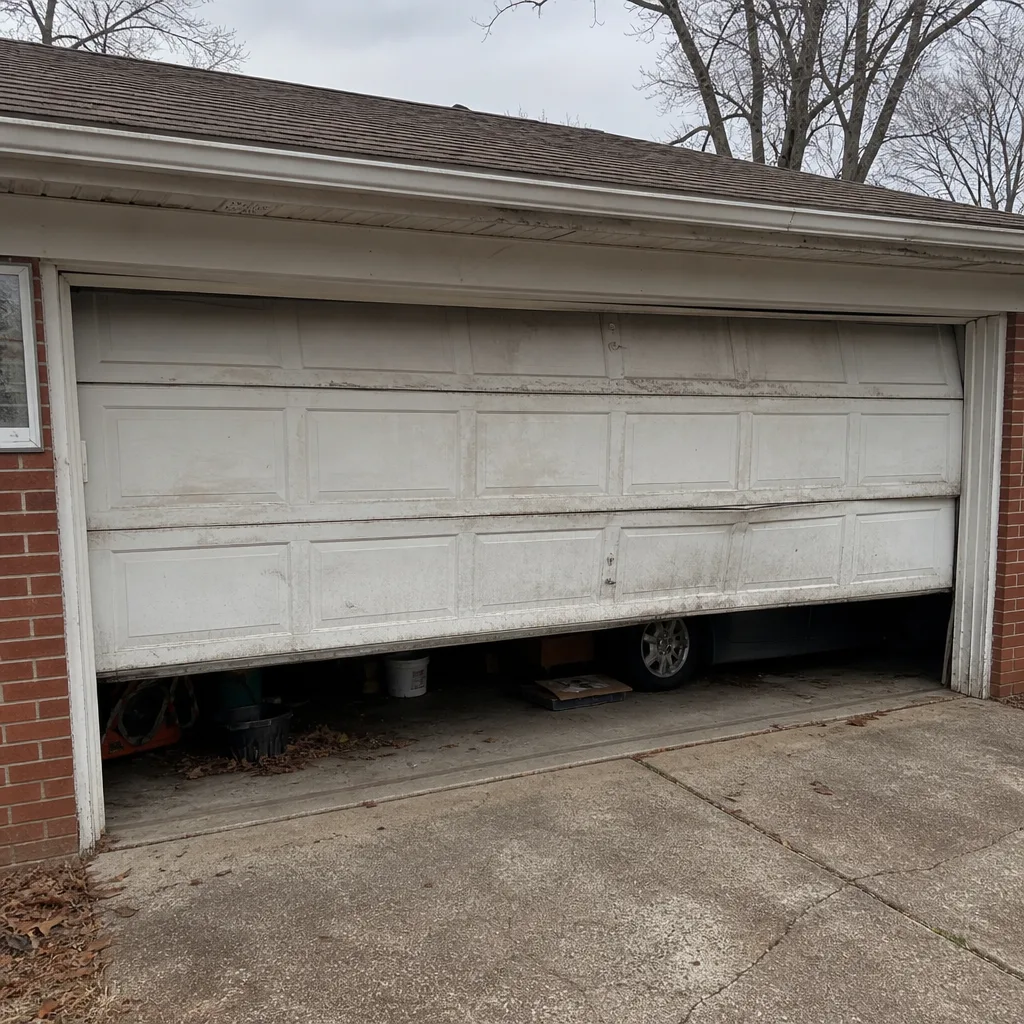 Before
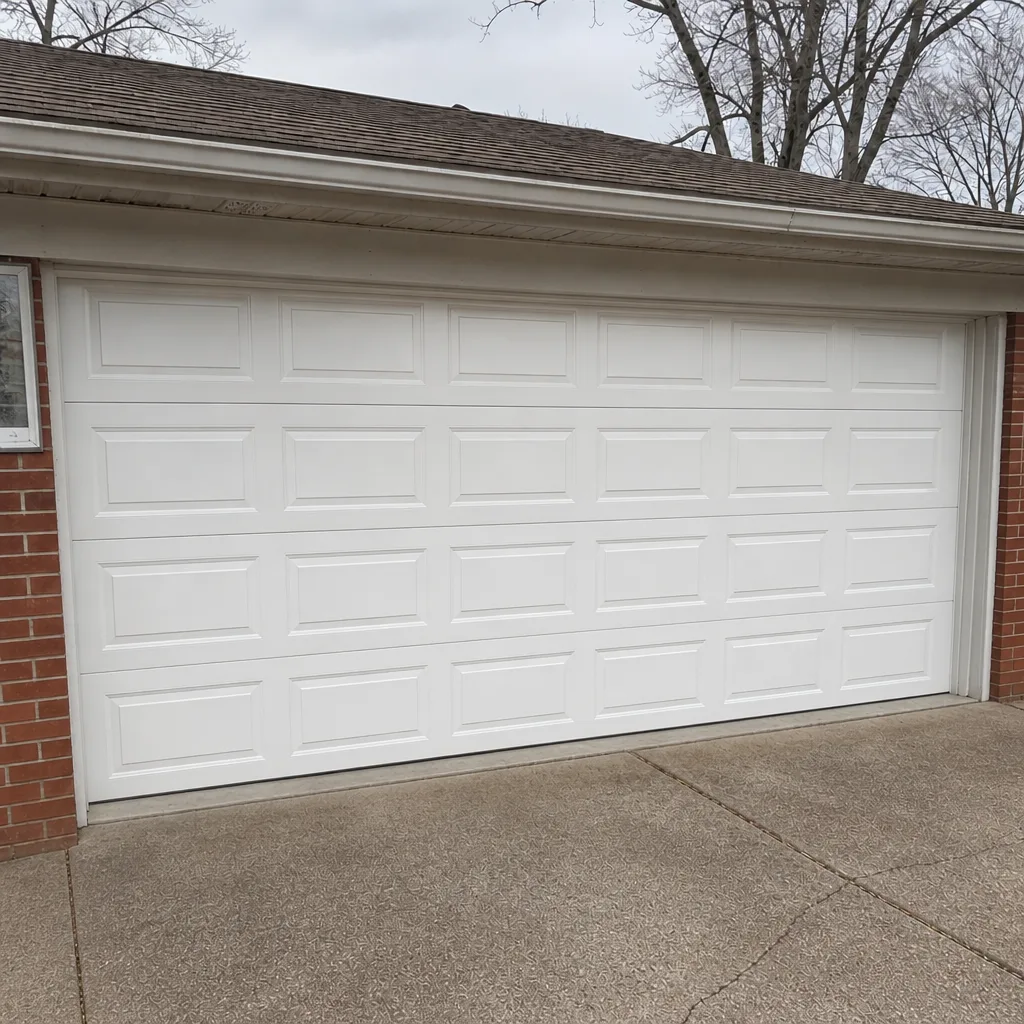 After
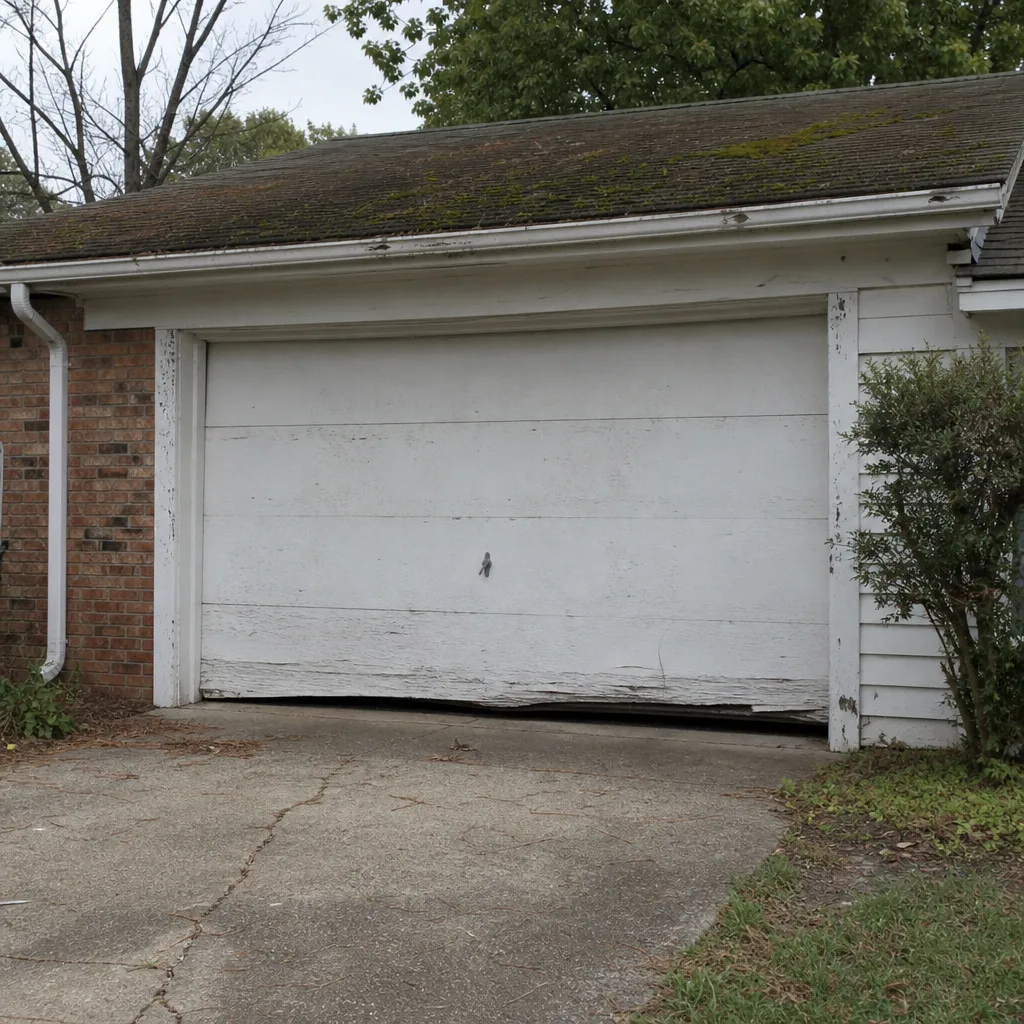 Before
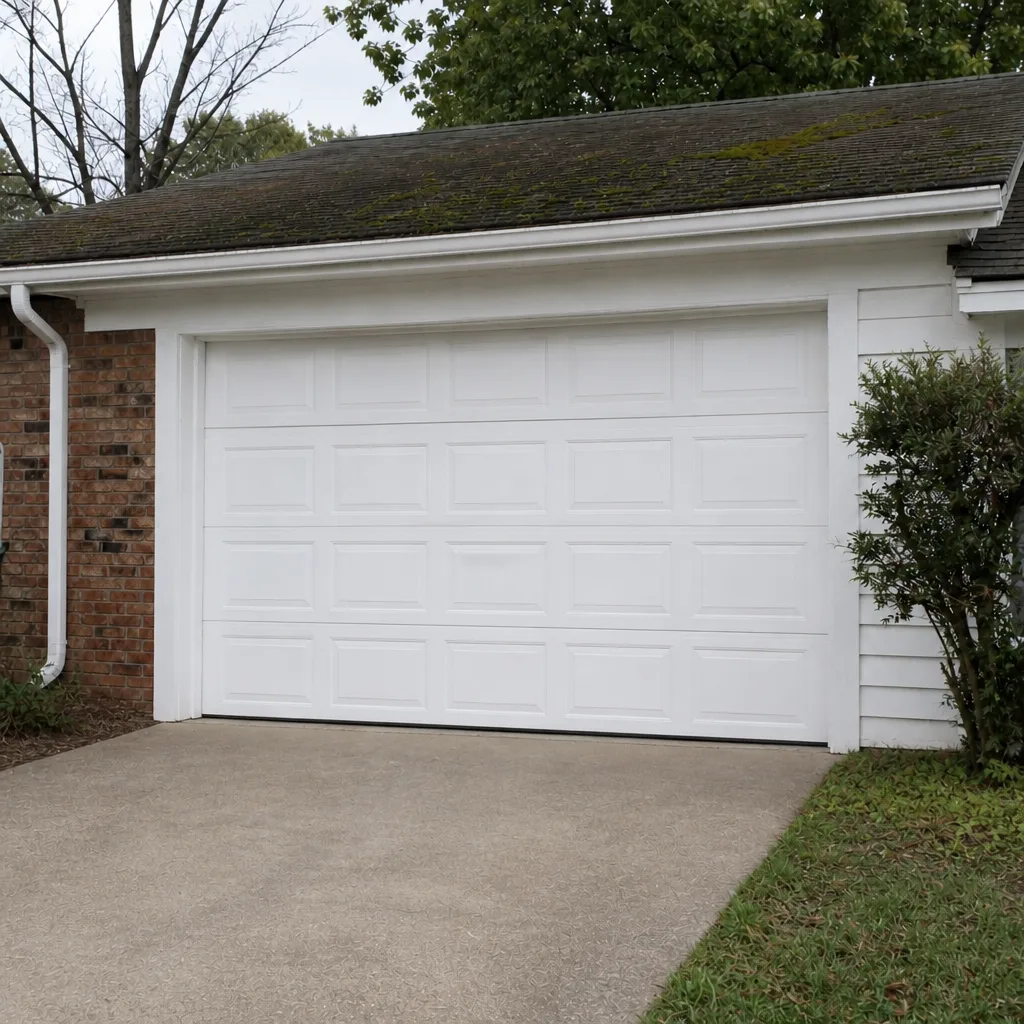 After
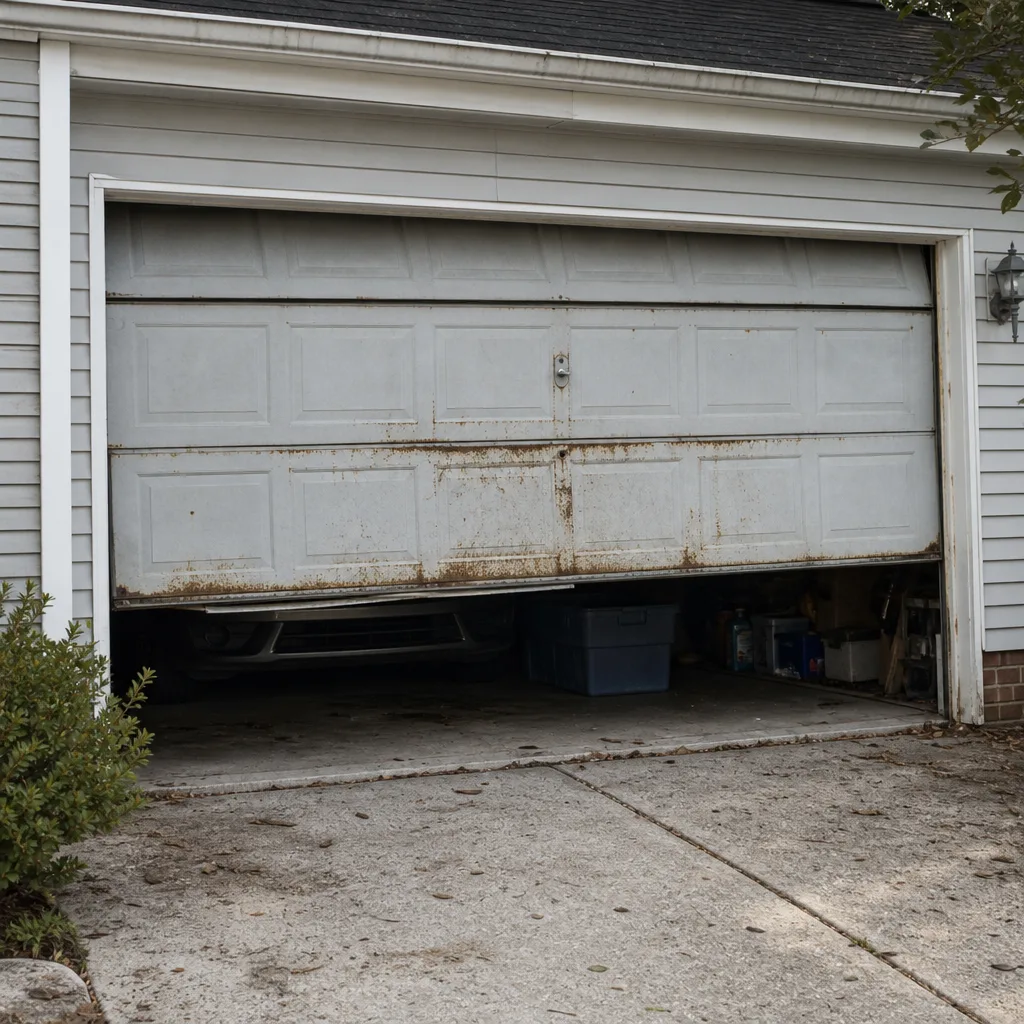 Before
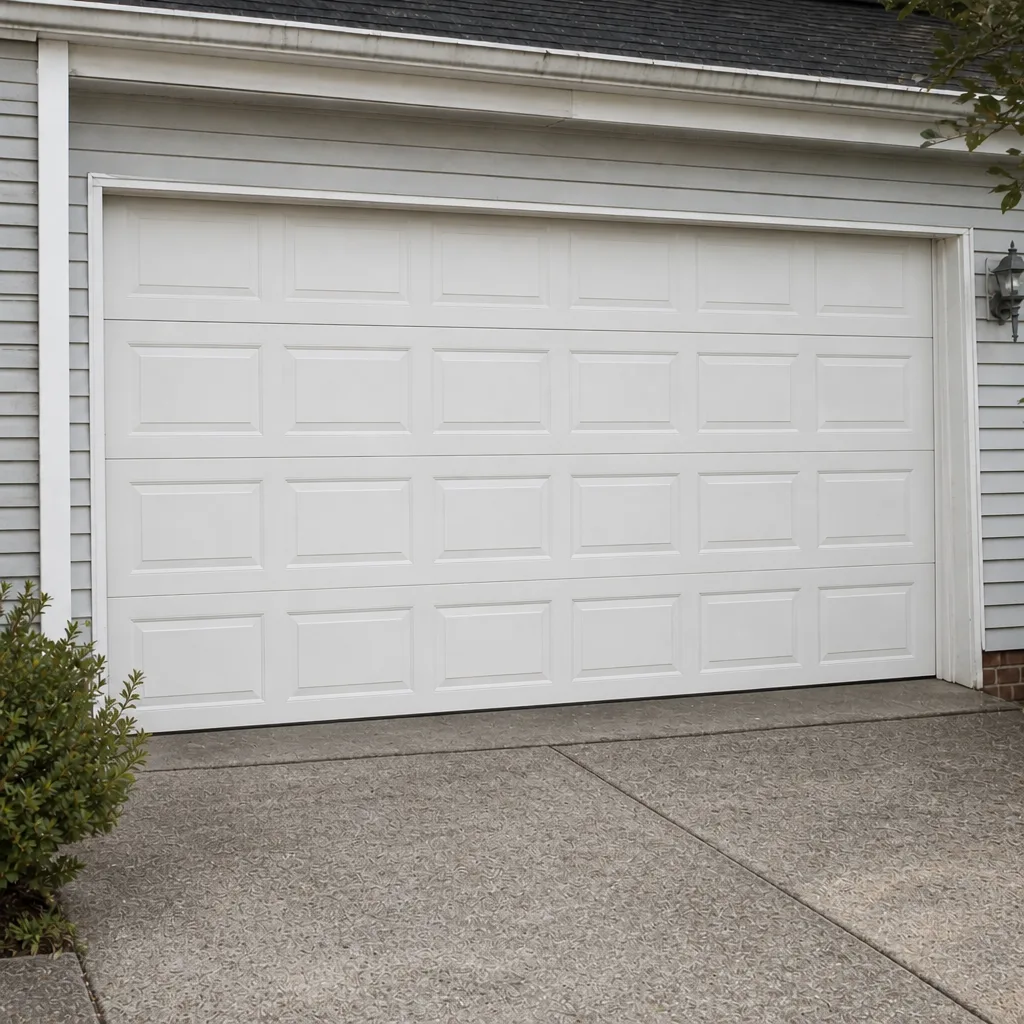 After
Common Mistakes to Avoid
- Pulling the manual release with a broken spring. As we covered above, this removes the counterbalance and lets the door drop. If a spring is broken, the door stays down and the release stays untouched until a technician arrives.
- Forcing a door back onto its tracks. A door off its tracks has already moved past its intended load. Forcing it can bend the panel or snap a cable. Leave it where it is and secure the opening instead.
- Boarding over the tracks. When you’re screwing plywood up to cover the opening, screw into the frame and trim, not the door’s own tracks. Bending the vertical tracks turns a storm fix into a full repair.
- Calling a handyman for a spring. Torsion and extension springs are a trade-specific job. A general handyman may get you a band-aid that fails, and the door’s balance is what protects the household – not just the door itself.
- Skipping the pre-hurricane inspection. Norfolk’s wind-borne debris exposure makes the pre-season check far more valuable than the emergency visit. A door that passes inspection in May isn’t a hurricane problem in September.
- Ignoring a safety reverse failure. If the 2-by-4 test doesn’t stop the door, the photo-eye or the opener’s safety circuit needs attention. A door that doesn’t reverse on contact is a child and pet safety issue.
- Not knowing the model number before you call. Every minute a technician spends identifying your system is a minute added to the visit. Snap a photo of the label in advance and keep it on your phone.
When to Call a Professional
Call a professional immediately for any spring or cable visible damage, any door that has come off its tracks, any door that moves unexpectedly or won’t stop, or any opener that strains without moving the door. Call the same day for an opener that has gone silent, a safety reverse that has failed, or a door that binds through its cycle. For a slow-wearing bottom seal or a noisy but functional door, schedule it – condition matters more than timing. In all cases, the price is quoted and agreed before any work starts, so you know exactly what you’re approving. Norfolk Garage Door Repair Co offers free estimates in Norfolk – call (877) 831-7441 and describe what you’re seeing. If you’re not sure whether it’s an emergency, we’ll help you decide.
Frequently Asked Questions
Find the red manual release cord, make sure the door is fully closed, and pull the cord down and toward the door to disengage the opener. Then lift the door by hand, standing to the side. Don’t lift it if you suspect a broken spring. Call (877) 831-7441 if the door feels heavy or won’t move after release – we can walk you through the specific release on your brand.
Spring replacement in Norfolk typically runs $180-$340 for a single spring, and since matched pairs are usually replaced together, expect about double for a pair. Opener repair is typically $150-$300, and a door off its tracks often lands in the $200-$400 range depending on the damage. Every price is quoted and agreed before any work starts, so the written estimate is your final number. Call (877) 831-7441 for an exact quote – estimates are free.
Yes. Emergency garage door service is a core offering, not an add-on, and same-day response is normal for spring failures, doors stuck open or closed, and openers that have failed. Call (877) 831-7441 with the brand and model and we’ll tell you how soon a technician can be there.
No. The written estimate issued before any work is the price you pay, and we don’t start until you’ve approved it. If we find additional damage once we’re in, we stop and quote the additional work in writing before touching anything else. There’s no scenario where we finish the job and hand you a bigger invoice. Call (877) 831-7441 for a free estimate.
The local professionals we connect you with are licensed and insured as their state requires. Our technicians have up to 13 years of experience and are certified to service eight major brands, including LiftMaster, Chamberlain, Genie, Clopay, Amarr, Wayne Dalton, Craftsman, and Raynor. Call (877) 831-7441 to book.
No. A functioning wind-rated door that has passed inspection is meant to do its job during the storm, and boarding over the door can interfere with the door’s structural response under wind load. Board only if the door is damaged or can’t close. If your door predates current wind-borne debris standards, a pre-season inspection is worth scheduling – call (877) 831-7441 to book a free estimate on repair or replacement.
The Bottom Line
Norfolk garage door emergencies come in two forms, and each has a learnable protocol. Storm failures need the opening secured before anything else. Mechanical failures need the door left in place and the manual release left untouched, especially when a spring is involved. Everything else is preparation: know your brand and model, keep a small kit in the garage, run the hurricane-season checklist, and call a specialist rather than forcing the door. When you do call, the three facts – brand, symptom, and whether you’ve overridden the opener – get the right parts in the vehicle on the first trip. For fast garage door repair across Norfolk, call (877) 831-7441 and we’ll take it from there.
If you’re reaching the end of this guide with a specific problem, call us at (877) 831-7441. We’ll take the brand, the model, and the symptom, and quote you a price before any work begins. You can also read our full range of services at Norfolk Garage Door Repair Co and see exactly what we cover, from a single failed spring to a full door replacement.
Written by the team at Norfolk Garage Door Repair Co.